

A child’s smile feels pure and innocent, but behind that smile, tiny teeth are working hard every single day. They chew, help with speech, and shape the face as a child grows. Still, many parents underestimate how important child’s teeth brushing really is. Brushing often feels like a small daily task, but skipping it can quietly lead to cavities, pain, and fear of dental care later in life. Understanding how, when, and why to brush a child’s teeth can make all the difference between lifelong oral health and early dental problems.
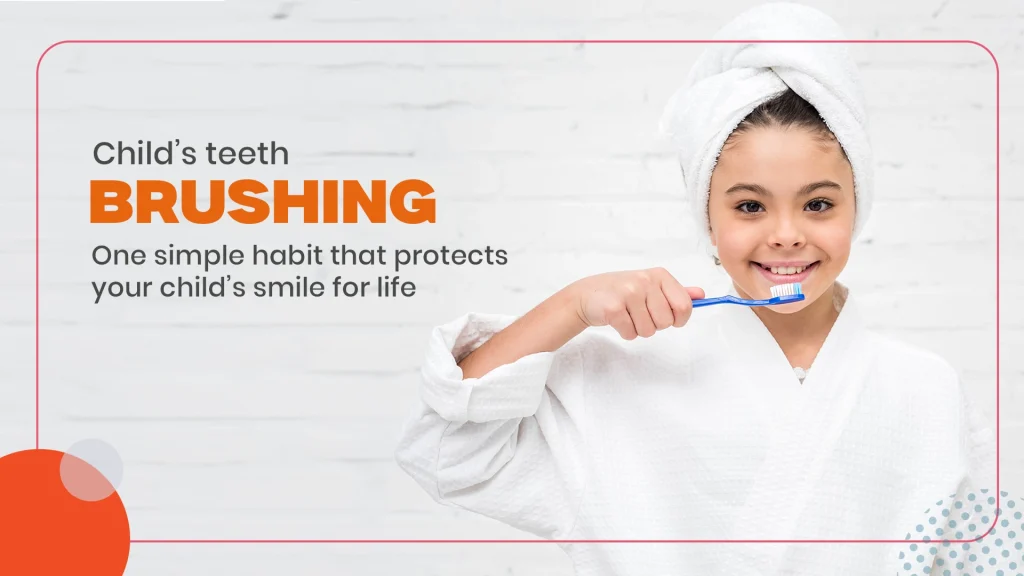
Why Brushing a Child’s Tooth Is Mandatory
Many parents believe baby teeth are temporary and do not need much care. This belief is risky. Baby teeth play a major role in holding space for permanent teeth, guiding jaw development, and helping children chew and speak properly. When brushing a child’s teeth is neglected, plaque builds up quickly, leading to decay even before permanent teeth appear.
Poor oral hygiene in childhood can also cause pain, infections, and difficulty eating. More importantly, children who suffer dental pain early often develop fear and anxiety toward dentists. Regular child’s teeth brushing prevents these problems and helps children grow up viewing oral care as normal, not stressful.
How to Brush a Child’s Teeth the Right Way
Brushing is not just about moving a toothbrush around. Technique matters, especially for small mouths and sensitive gums. Parents should brush gently and patiently, making sure no area is ignored.
Use a soft toothbrush designed for children and apply only a small amount of toothpaste. The brush should move in slow, circular motions instead of rough back-and-forth scrubbing. All sides of the teeth need attention, including the back teeth that often get missed. Brushing should last for about two minutes so that cleaning is effective but not rushed.
At early ages, parents must brush for the child. As the child grows, brushing can slowly become a shared activity.
Teaching a Child to Brush Teeth Independently
Teaching independence is a gradual process. A child should first watch, then assist, and finally brush alone under supervision.
Effective ways to teach kids brushing include:
- Brushing together in front of a mirror
- Turning brushing into a game or story
- Using songs or a two-minute timer
- Praising effort, not perfection
Parents should supervise brushing until at least 7–8 years of age to ensure proper technique.
Proper Time for Child’s Teeth Brushing
Understanding the right time to brush a Childs teeth is crucial for cavity prevention.
The best times are:
- Morning: After waking up
- Night: Before bedtime
Night brushing is especially important because saliva flow reduces during sleep, allowing bacteria to grow faster.
Avoid brushing immediately after acidic foods. Wait 30 minutes to protect enamel.
How to Choose the Perfect Toothpaste for a Childs
Choosing the right toothpaste helps make brushing a child’s teeth safer and more effective. Children’s toothpaste is designed to be gentle on enamel and gums while still offering protection against cavities.
Parents should check the toothpaste label carefully. A child-friendly toothpaste should contain the right amount of fluoride for the child’s age and should not have harsh whitening agents. Mild flavors work better than strong mint, especially for younger children who may dislike intense tastes. A toothpaste that tastes pleasant encourages regular kids brushing without resistance.
Is Brushing a Child’s Teeth Twice a Day Really Required?
Brushing once a day may seem enough, but it does not provide full protection. Bacteria form constantly in the mouth, especially after meals. Brushing twice a day removes this buildup before it causes damage.
Morning brushing refreshes the mouth and prepares teeth for the day. Night brushing is essential because it protects teeth during long hours of sleep. For long-term oral health, brushing twice daily should be non-negotiable. This routine trains children to value cleanliness and self-care from an early age.
When to Start Brushing a Child’s Teeth?
Oral hygiene should start well before a child’s first tooth emerges. Gums need cleaning because bacteria can settle there too. Once the first tooth starts developing, brushing should start immediately.
A simple timeline helps parents stay on track:
- Even before teeth emerge, gently wipe the gums using a clean, soft cloth.
- When the first tooth erupts, begin brushing with a soft brush
- Around age two, introduce a small amount of toothpaste
- By age three, teach the child to spit out toothpaste
Early child’s teeth brushing prevents early tooth decay and helps children accept brushing as a daily habit without struggle.
5 Importance of Brushing a Child’s Teeth
Starting correctly makes brushing easier for both parents and children. A few simple habits can turn brushing into a smooth daily routine.
- Begin brushing early and stay consistent
- Let the child choose their toothbrush to build interest
- Keep brushing time calm and positive
- Brush together as a family whenever possible
- Schedule regular dental checkups
These small steps help children feel comfortable and confident about oral care.
Summary
Child’s teeth brushing is not just about keeping teeth clean. It protects a child’s comfort, confidence, and overall health. From understanding the right time to brush a child teeth to choosing the right toothpaste and building a twice-daily routine, every detail matters. When parents guide children with patience and consistency, kids brushing becomes a habit that lasts a lifetime and prevents avoidable dental problems.
Suggestion
If you are looking for the best clinics in Hyderabad for your child, Tooth Dental is a name worth considering. Known for its advanced dental care and patient-focused approach, It is a fast-growing Dental clinic in Hyderabad, offering modern invisible braces treatments with expert guidance and personalized care.
Follow for more updates : https://www.instagram.com/tootdental/?hl=en