

Everything You Need to Know Before You Decide
A root canal treatment is a dental procedure used to remove infection from inside a tooth and save it from extraction.
If you are experiencing severe tooth pain, sensitivity to hot or cold, swelling, or pain that wakes you up at night, it may indicate an infected tooth pulp. In such cases, root canal treatment is often the most effective solution.
Many people still fear root canal treatment because of outdated information. However, modern dentistry has made the procedure safe, precise, and almost painless with advanced anesthesia and technology.
If you are researching root canal treatment in Hyderabad, this guide will give you a clear, realistic understanding of the procedure, pain levels, cost, recovery, and when it is truly necessary — without exaggeration or confusing medical jargon.
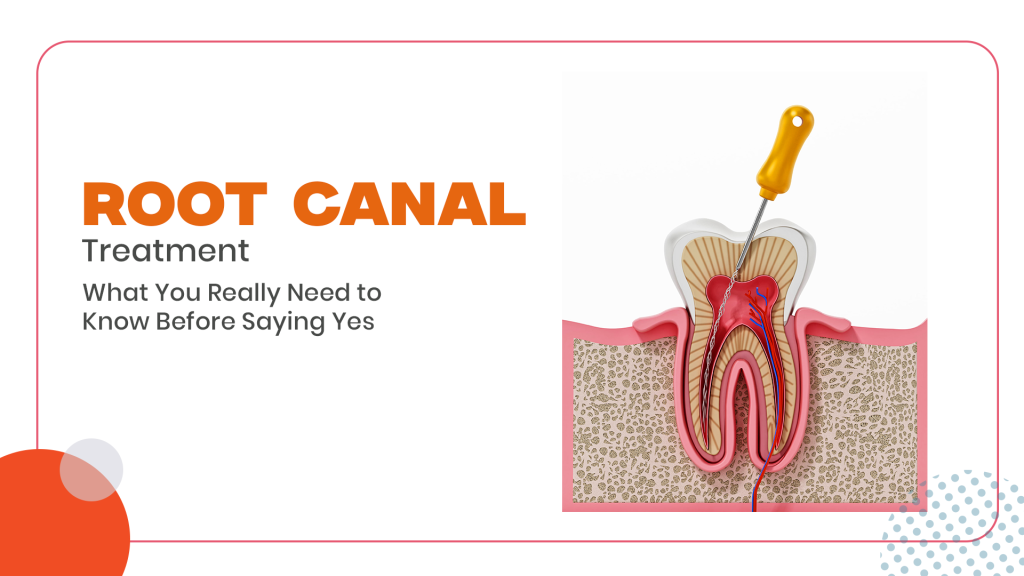
What is a Root Canal?
Let’s clarify something first. A root canal is not the treatment itself. It is a part of your tooth. Each tooth contains a soft inner tissue known as the pulp. This pulp contains nerves and blood vessels. It runs through narrow pathways inside the roots, those pathways are called root canals. When bacteria enter the tooth because of deep decay, a crack, trauma, or repeated dental work, the pulp becomes infected. Since the pulp sits inside a hard tooth structure, any swelling creates pressure. That pressure is what causes pain. If left untreated, the infection can spread beyond the tooth and affect surrounding bone.What Is Root Canal Treatment?
Root canal treatment is the process of removing the infected pulp, cleaning the inside of the tooth, disinfecting it, and sealing it to prevent further infection. The goal is not just to remove pain. The real goal is to save your natural tooth.What Happens During the Root Canal Treatment Procedure?
Here is what typically happens, step by step:Step 1: Examination and Imaging
Your dentist evaluates symptoms and takes an X-ray to assess infection depth.Step 2: Local Anesthesia
The area is completely numbed. Modern anesthesia ensures minimal discomfort.Step 3: Access Opening
A tiny access hole is created in the tooth to reach the infected portion.Step 4: Cleaning the Canals
Using precise rotary instruments, the infected tissue is removed. The canals are shaped and disinfected.Step 5: Filling the Canals
The cleaned root canals are then filled with a sterile material known as gutta-percha.Step 6: Sealing and Crown Placement
The tooth is sealed. In most cases, a dental crown is placed later to restore strength and prevent fracture. Most Root canal treatment procedures are completed in one or two visits, depending on infection severity.Who Actually Needs this Treatment?
Not every toothache requires it. But certain symptoms are strong indicators:- Persistent throbbing pain
- Sensitivity to hot or cold that lingers
- Swelling in the gums
- Pain while chewing
- A darkened tooth
- A small pimple-like swelling on the gum
Types of Root Canal Treatment
Different clinical situations require tailored approaches.1. Single Visit Root Canal Treatment
Completed in one sitting using advanced equipment. Suitable for mild to moderate infections.2. Multiple Visit Root Canal Treatment
Used when infection is extensive. Medication may be placed between appointments.3. Retreatment (Re-RCT)
Performed when a previously treated tooth develops reinfection.4. Surgical Root Canal (Apicoectomy)
A minor surgical procedure done if conventional treatment does not resolve infection at the root tip. Your dentist selects the method based on diagnostic findings.Root Canal Treatment Cost
The Root canal treatment cost depends on clinical complexity, tooth position, geographic location, and the expertise of the dentist. Molars are generally more expensive due to multiple canals and greater procedural difficulty.Root Canal Treatment Cost in India
The table below provides an approximate cost range across India:| Type of Tooth | Estimated RCT Cost (INR) | Crown Cost (INR) | Total Approximate Cost (INR) |
| Front Tooth (Incisor/Canine) | ₹2,000 – ₹5,000 | ₹3,000 – ₹10,000 | ₹5,000 – ₹15,000 |
| Premolar | ₹3,000 – ₹8,000 | ₹4,000 – ₹12,000 | ₹7,000 – ₹20,000 |
| Molar (Single Visit or Complex) | ₹5,000 – ₹12,000 | ₹5,000 – ₹15,000 | ₹10,000 – ₹27,000 |
| Retreatment (Re-RCT) | ₹6,000 – ₹15,000 | Additional if crown replaced | ₹10,000 – ₹30,000+ |
Factors That Influence Root Canal Treatment Cost
- Number of root canals in the tooth
- Severity of infection
- Use of advanced rotary equipment
- Need for microscopic endodontic treatment
- Type of dental crown (metal, PFM, ceramic, zirconia)
- Clinic location (metro vs non-metro cities)
- Experience of the endodontist
Treatment Side Effects
Most patients recover quickly, but minor side effects may include:- Mild discomfort for 2–3 days
- Slight swelling
- Temporary sensitivity
- Jaw stiffness
- Missed canals
- Instrument separation
- Persistent infection
- Tooth fracture
Facts and Myths
| Myth | Fact |
| Root canal treatment is extremely painful. | Modern anesthesia makes the procedure nearly painless. |
| Extraction is better than RCT. | Saving the natural tooth is biologically superior. |
| RCT causes systemic illness. | No scientific evidence supports this claim. |
| Treated teeth become useless. | With a crown, they function normally for years. |
| RCT always fails. | Success rates are typically 85–95%. |
| Pain relief means infection is gone. | Infection may remain even if pain subsides temporarily. |
Rate of Failure
The overall success rate is between 85% and 95%. Failure may occur due to:- Incomplete cleaning
- Missed accessory canals
- Poor sealing
- Delayed crown placement
- Tooth fracture
How to Ensure Long-Term Success
To maximize durability after Root canal treatment:- Get a crown placed promptly
- Maintain proper oral hygiene
- Avoid chewing very hard foods
- Visit your dentist regularly
- Complete prescribed medications
Root Canal Treatment in India: Why It Is Popular
- Affordable pricing
- Skilled endodontists
- Advanced dental technology
- Strict sterilization standards
- High success rates